Showing posts with label Khangai. Show all posts

September 23, 2016

Birding trip around the Khangai Mts
central Mongolia, summer 2013


A birding hotspot of the Gobi Desert: Boon Tsagaan Nuur
with the Gobi Altai Mts in the background, Aug 2013, © T. Hallfarth


part three:

Aquatic birds in the Gobi Desert –
birding around Boon Tsagaan Nuur

by Thomas Hallfarth


( links to previous posts: part one, part two )


On 31 July we left the nomadic family of our driver’s brother to go birding at Boon Tsagaan Nuur, the largest of the Gobi lakes. The change from mountain to desert birdlife already began at the southernmost hills of Khangai Mts. Here we saw the first birds of desert habitats. We found a group of Mongolian Finches in a dry river valley, probably the breeding ground of these birds and also a pair of Isabelline Shrikes. Not far from this place, a female Chukar with one chick crossed our way. Surprisingly we also discovered three Henderson's Ground Jays and a single juvenile Desert Wheatear, both species we expected not until we reached the proper Gobi Desert.


Mongolian Finch
South part of Khangai Mts, Jul 2013, © B. Möckel


Isabelline Shrike
South part of Khangai Mts, Jul 2013, © T. Hallfarth

Henderson’s Ground Jay
South part of Khangai Mts, Jul 2013, © T. Hallfarth


Desert Wheater, juv
South part of Khangai Mts, Jul 2013, © T. Hallfarth

During the short crossing of the Gobi Desert we saw good numbers of Pallas’s Sandgrouse, including a family with one chick and some flocks of several hundreds of birds.


Pallas’s Sandgrouse, pair
Gobi Desert, Jul 2013, © T. Hallfarth

Then, in the afternoon we arrived at one of the birding hotspots of our trip, the famous Boon Tsagaan Nuur. Here we stayed until 2 August. In this time we made some interesting observations. The greatest concentration of birds was at the estuary of Baydrag Gol in the north-eastern part of the lake.


Boon Tsagaan Nuur: Beautiful landscape surrounding
the lake, Aug 2013, © T. Hallfarth

A minimum of 15,000 Black-headed Gulls were here, furthermore 1,100 Spoonbills, 800 Cormorants, 800 Caspian Terns, and 500 Pallas’s Gulls. Mongolians fourth Slender-billed Gull was one of the top species we saw here. Also, 25 Relict Gulls, eleven Greater Sand Plovers, two Pallas’s Fish Eagles and singles of Grey-tailed Tattler, Terek Sandpiper and Little Tern provided further nice observations.


Caspian Tern
Boon Tsagaan Nuur, Aug 2013, © T. Hallfarth

Pallas’s Gull (flying in front of Black-headed Gulls)
Boon Tsagaan Nuur, Aug 2013, © T. Hallfarth

Slender-billed Gull
Boon Tsagaan Nuur, Aug 2013, © B. Möckel


Relict Gulls
Boon Tsagaan Nuur, Aug 2013, © T. Hallfarth

Relict Gulls
Boon Tsagaan Nuur, Aug 2013, © T. Hallfarth

Relict Gull
Boon Tsagaan Nuur, Aug 2013, © T. Hallfarth

Relict Gulls
Boon Tsagaan Nuur, Aug 2013, © T. Hallfarth

Grey-tailed Tattler
Boon Tsagaan Nuur, Aug 2013, © T. Hallfarth

Grey-tailed Tattler
Boon Tsagaan Nuur, Aug 2013, © B. Möckel

A short trip into the nearby very dry Gobi Altai Mts. provided a further Chukar and some beautiful views at Boon Tsagaan Nuur.


Gobi Altai Mts.: Dry valley in the south part
of the mountains , Aug 2013, © T. Hallfarth

Chukar
Gobi Altai Mts., Aug 2013, © T. Hallfarth

Gobi Altai Mts.
View at the lake Boon Tsagaan Nuur , Aug 2013, © T. Hallfarth

With these observations we finish our journey to Mongolia and also this little trip report. A German proverb says literally: “After the game is before the game”. And so we were already planning our next trip to Mongolia…


Gobi Altai Mts.
Good bye, Boon Tsagaan Nuur… Aug 2013, © T. Hallfarth

December 19, 2013


part nine:

Hangover Birding

text by ABu


Links to previous Mountain Birds 2012 on Birding Mongolia:

part 1, part 2, part 3, part 4, part 5, part 6, part 7, part 8


As our list of mountain birds was almost complete by now we could switch to fun birding at a slower pace. On 20 June we just made it down the hills to the small village of Buutsagaan. Here we were invited for dinner (by the family of our driver Banzai) and as always in Mongolia, there was more than enough food on the table. There was even more than food. This “more than food” lead to a big hangover the next day and gave us a late and lazy start. Shortly after having left the settlement we came across a group of Henderson’s Ground Jays and the photographers went off to get decent shots of this running bird. The first birds were quite flighty, though, but on our way to the lake we saw more individuals, totalling five birds, which is quite a lot given the fact that most of us slept on the way to the lake.


Desolate barren ground is the prime habitat for

Henderson’s Ground Jay, Buutsagaan, Jun 2012, © A. Schneider

Henderson’s Ground Jay hiding its bold plumage parts,
near Buutsagaan, Jun 2012, © T. Langenberg

Henderson’s Ground Jay, near Buutsagaan,
Jun 2012, © T. Langenberg

As we approached the lake on its western side we had several groups of Pallas’s Sandgrouse and literally the first bird we saw at the lake was a young Pallas’s Fish Eagle. At the southern shore the low water level (a record low!) had created two new islands which had emerged from the lake. These had been occupied by c. 600 pairs of Great Cormorants and were also used by about 750 pairs of Mongolian Gulls.

In the south of the lake is a small Saxaul forest where we quickly located a nest of Saxaul (Steppe/Asian Grey) Shrike (pallidirostris). We ringed the chicks and the female of the pair but hurried to leave the site because of the unpleasant abundance of mosquitoes.

Male Saxaul (Steppe Grey) Shrike,
Boon Tsagaan Nuur, Jun 2013, T. Langenberg

2cy female Saxaul Shrike, Boon Tsagaan Nuur,
Jun 2013, T. Langenberg & A. Buchheim

Saxaul Shrike chick, Boon Tsagaan Nuur,
Jun 2013, © K. Krätzel

Male Pallas’s Sandgrouse,
near Boon Tsagaan Nuur, Jun 2012, © T. Langenberg

Goyo Plant Cynomorium songaricum parasitizing Nitraria sp,
Boon Tsagaan Nuur, Jun 2012, © T. Langenberg

immature Pallas’s Fish Eagle,
Boon Tsagaan Nuur, Jun 2012, © A. Buchheim

All the former wetlands that could be found until a few years ago were dried up so we decided to stay overnight at the delta of the Baidrag Gol in the north-east corner of the lake. The river once was mighty but thanks to the mining and the long-lasting drought it is nowadays only ankle-deep. Nevertheless, there are some wet meadows left near the delta of the Baidrag Gol.

We went birding and among the almost 500 Black-headed Gulls we found an adult Relict Gull, quite “boring” now (see here). Unfortunately we failed in finding a Brown-headed Gull (a species recorded from here more or less regularly). Only three Pallas’s Gulls were logged and there was not much else.

As we went on a bit to get closer to the other Pallas’s Fish Eagles (one adult and some immatures, six eagles in total) we flushed a small whitish egret which was attending the livestock. This turned out to be an adult breeding-plumaged Eastern Cattle Egret. Cattle Egret Bubulcus ibis (sensu lato) has recently been split into Western Cattle Egret B. ibis (sensu stricto) and Eastern Cattle Egret B. coromandus. There are about 10 records of cattle egret known from Mongolia, and they still have to be checked to find out if only Eastern Cattle Egret (with 2-3 proven records) are involved. (see R Ahmed 2011: Subspecific identification and status of Cattle Egret, 149-162. In Dutch Birding. Download PDF)

Adult breeding plumage Eastern Cattle Egret,
Boon Tsagaan Nuur, Jun 2013, © A. Buchheim

While we were celebrating this record (and keeping our level of alcohol!) three Black Storks arrived as did nine Eurasian Spoonbills. Cheers!

Birding the wet grasslands at Boon Tsagaan Nuur,
Jun 2013, © Armin Schneider

Near-adult Pallas’s Fish Eagle, Boon Tsagaan Nuur,
Jun 2013, © T. Langenberg

2cy Pallas’s Fish Eagle, Boon Tsagaan Nuur,
Jun 2013, © A. Buchheim

The power celebrating made it necessary to go shopping and we did just this in Bayankhongor on 22 June. This day was a transit day and we drove all day until darkness (380 km in total). During the day we did not see that much but a few Himalayan Griffons and (most welcomed by Sönke!) a male Oriental Plover in display flight let us interrupt the driving. In the evening we pitched the tents near Arvaikheer.

How to make a birder happy…
Bayankhongor, Jun 2012, © K. Krätzel

This guy also made us happy! Male Oriental Plover in
display flight, near Arvaikheer, Jun 2013, © T. Langenberg

Underside of the same Oriental Plover,
near Arvaikheer, Jun 2013, © T. Langenberg

Painting of the Khukh Nuur gull colony in a roadside
restaurant near Arvaikheer, Jun 2013, © K. Krätzel

The weather was a mixture of wind and rain, sometimes augmented by hail. More about the remaining few days of this trip will be reported on this site soon. Stay tuned!

Adverse weather in Jun 2013, near Arvaikheer, © Armin Schneider

December 5, 2013


part four:

Leaving the Khangai Mountain range

text & photos by Abu


links to previous Mr. Hodgson and the Gull Calls 2013 on Birding Mongolia: part 1, part 2, part 3

Our visit to Khukh Nuur was excellent again and this site will probably become a stake-out for a number of sought-after species soon. It not only supports a large population of Hodgson’s Bushchat (27 individuals caught, ringed, measured in 2013 alone!) but is also a reliable spot for seeing species like Altai Snowcock, Sushkin’s Asian Rosy Finch and many others.

Nevertheless we left for the forest near Terchijn Tsagaan Nuur. While driving through the mountains on 4 June we came across more Güldenstädt’s Redstarts, Himalayan Griffons and even saw a Corsac aka Steppe Fox.

Corsac, Khangai Mts, Jun 2013

Himalayan Griffon, Khangai Mts, Jun 2013

Himalayan Griffon, Khangai Mts, Jun 2013

In the night we heard an Ural Owl calling from the slope above our camp and in the morning several Eurasian Wrynecks, Pine Buntings, Olive-backed Pipits, Hume’s Leaf Warblers and Red-throated Thrushes were obvious inhabitants of the larch forest. Patrick found a 2cy Red-flanked Bluetail and got it sound recorded.

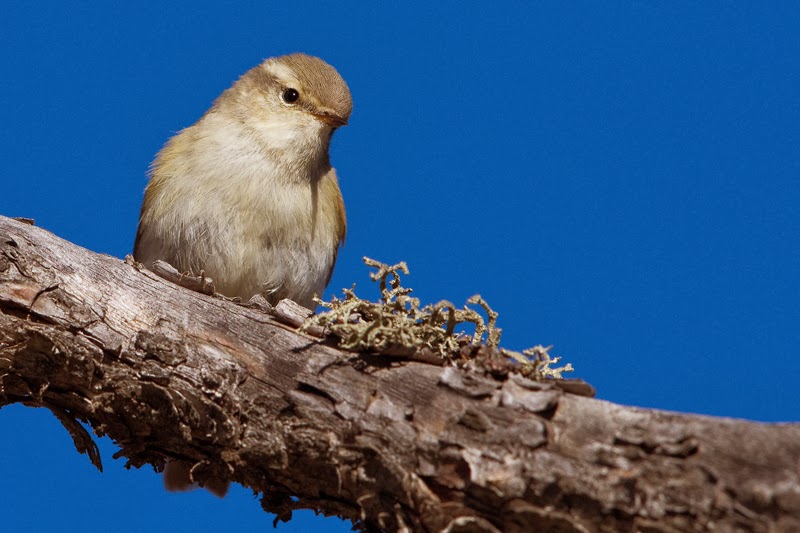
Hume’s Leaf Warbler, near Terchijn Tsagaan Nuur, Jun 2013

Male Pine Bunting, near Terchijn Tsagaan Nuur, Jun 2013

Olive-backed Pipit, near Terchijn Tsagaan Nuur, Jun 2013

After breakfast we went on and checked several flocks of waterfowl but we could not find any of the “elevated” species. In the early afternoon we arrived at Tsetserleg where we pitched the tents in the valley above—and it turned out that this valley also has a pair of Ural Owl. Other standard birds here were Godlewski’s Bunting, Common Rock Thrush, Pied Wheatear, Taiga Flycatcher, Brown Shrike and White-backed Woodpecker.

Male Brown Shrike, Tsetserleg, Jun 2013

On 7 June we drove to Ogij Nuur via Khakhorin.

More about the birds of Ogij Nuur next in this theatre—keep checking Birding Mongolia!

September 8, 2013


part eight:

Hi(gh) Khangai!

text by ABu


Links to previous Mountain Birds 2012 on Birding Mongolia:


Adult Bearded Vulture, near Khukh Nuur,
Bayankhongor, Jun 2012, © A. Buchheim

Thomas high above Khukh Nuur,
Bayankhongor, Jun 2012, © J. Langenberg

From the very first e-mail exchange between Jörg and ABu about the next trip to Mongolia, it had been our plan to set up a tour for obtaining a long list of mountain birds and as we had not recorded all the desired species in the Altai mountain range (see the previous posts linked above), we were heading now (on 18 June 2012) for the high elevation lake Khukh Nuur in the northern part of the Bayankhongor Aimag (aimag=province). This lake, at an altitude of 2600 m a.s.l., is situated not very far east of the highest mountain of the Khangai, Otgon Tenger, and hence is almost in the centre of this mountain range. At the lake we hoped to see little-known birds like Hodgson’s Bushchat or Asian Rosy Finch. To our surprise and disappointment we had not seen either in the west.

As soon as we got off the cars we saw our first Asian Rosy Finches and we hurried to pitch our tents near the colony of Mongolian Gulls to have more time for birding. The rosy finches here belong to the almost unknown taxon sushkini and a publication about the plumages of this form is on the way—so quickly join the OBC to get a copy of one of the next issues of BirdingASIA in which more pictures will be featured!

Before sunset Jörg and I went scouting for the Altai Snowcock and about one kilometre from our camp we heard one calling from the ridge. Although it took us about 30 minutes to find it we were sure to be at the right place for seeing mountains birds. If not here, where else would we have good chances to find the bushchat? So back to the camp and arrange an early start for next morning to get the snowcock seen by the complete group.

Male Asian Rosy Finch, Khukh Nuur,
Bayankhongor, Jun 2012, © A. Buchheim


Female Asian Rosy Finch, Khukh Nuur,
 Bayankhongor, Jun 2012, © T. Langenberg

Searching for Altai Snowcock,
Khukh Nuur, Jun 2012, © A. Schneider

And here it is: Altai Snowcock, digiscoped,
Bayankhongorijn Khukh Nuur, Jun 2012, © K. Krätzel

After having seen and heard several Altai Snowcocks with some fantastic observations like two birds fighting or a bird with small chicks, we began with the exploration of the site; after breakfast, of course. On the lake we had a couple of Stejneger’s Scoters, about 200 of moulting Bar-headed Geese and some Black-throated Divers aka Arctic Loons. The allegedly highest-altitude colony of large gulls held about 150 pairs and a handful (15 nests) of Great Cormorants bred there, too. Around our camp we logged Pallas’s Grasshopper Warbler, certainly a migrant, and the following breeding species: Citrine Wagtail, Brown Accentor, Black Redstart, Stejneger’s Stonechat and almost annoyingly numerous, Blyth’s Pipit. A Sulphur-bellied Warbler was also singing on the slope.

Claws 2, Blyth’s Pipit, Khukh Nuur, Bayankhongor,
Jun 2012, © A. Buchheim & T. Langenberg

Blyth’s Pipit on the ground, Khukh Nuur,
Bayankhongor, Jun 2012, © T. Langenberg

Blyth’s Pipit in flight, Khukh Nuur,
Bayankhongor, Jun 2012, © T. Langenberg

Further along the lake we found areas with bushes and even some trees with a number of other breeding species like Common Rock Thrush, Common Magpie, Hume’s Warbler, Eversmann’s Redstart (min. 5 territories) and Red-throated Thrush. We heard Willow Grouse calling from the undergrowth repeatedly but never managed to see one.

Hume’s Warbler, Khukh Nuur,
Bayankhongor, Jun 2012, © T. Langenberg

Pallas’s Grasshopper Warbler, Khukh Nuur,
Bayankhongor, Jun 2012, © T. Langenberg

Male Stejneger’s Stonechat, Khukh Nuur,
Bayankhongor, Jun 2012, © T. Langenberg

Male Red-throated Thrush, Khukh Nuur,
Bayankhongor, Jun 2012, © T. Langenberg

High above the lake, Armin came across yet another snowcock which was obviously guarding its chicks. No wonder that it immediately showed distracting display which Armin captured with his camera so nicely. On these higher plateaus we found more mountain birds. Altai and Alpine Accentors occur here side by side and the occasional Brown Accentor ventures up that high as well. Then a bird with lots of white was flying from rock to rock. No, not the bushchat, “just” a Güldenstädt’s Redstart. Finally everybody heard Jörg screaming through the radio: “I found a bushchat!” So we set up an improvised ringing camp and caught, measured, ringed and released a pair of Hodgson’s Bushchats (it actually needed two days!). No one paid any attention to the Rock Ptarmigans or the very common Water and Blyth’s Pipits anymore.

Altai Snowcock in distraction display, Khukh Nuur,
Bayankhongor, Jun 2012, © A. Schneider

Altai Accentor, Khukh Nuur,
Bayankhongor, Jun 2012, © T. Langenberg

Improvised ringing camp above Khukh Nuur,
Bayankhongor, Jun 2012, © A.Schneider

The most sought-after bird:
male Hodgson’s Bushchat, Jun 2012, © T. Langenberg

Claws 3: Mr. Hodgson, Khukh Nuur,
Bayankhongor, Jun 2012, © A. Buchheim & T. Langenberg

Female Hodgson’s Bushchat, Khukh Nuur,
Bayankhongor, Jun 2012, © A. Buchheim & T. Langenberg

The two bushchats were attending a nest and the male chased away other birds while the female was incubating their bluish eggs. Not much is known about these birds (see: Bräunlich, A. & Steudtner, J. 2008. Hodgson’s Bushchat Saxicola insignis in the Mongolian Altai. BirdingASIA 9: 70-71, PDF 225 kb: download) and we were extremely glad to contribute a small piece to the knowledge.

Other birds which we encountered were Himalayan Griffon (2 on 19 June) and almost daily we had views of Common House Martins (the subspecies lagopodum has darker underwing coverts than the nominate form and is therefore often thought to belong to Asian House Martin Delichon dasypus). Birding Mongolia will deal with this topic later; but for a thorough entry we first have to catch enough individuals of either of the taxa.

The weather at this altitude was soso, at best. We had daily hail showers and a lot of clouds but luckily the heaviest snow-/hail-/thunderstorms were directed to other sites so it could have been much worse!

Tolai Hare Lepus tolai, Khukh Nuur, Bayankhongor,
Jun 2012, © T. Langenberg

Common House Martins (lagopodum), Khukh Nuur,
Bayankhongor, Jun 2012, © T. Langenberg

We stayed at the lake until 20 June and left for the famous Boon Tsagaan Nuur to see and possibly catch Saxaul/Steppe (Grey) Shrike as well as try our luck on Pallas’s Fish Eagle and…

We will continue with this saga soon, so watch out on Birding Mongolia!