January 6, 2015

Northern Inner Mongolia in Winter
Trip Report

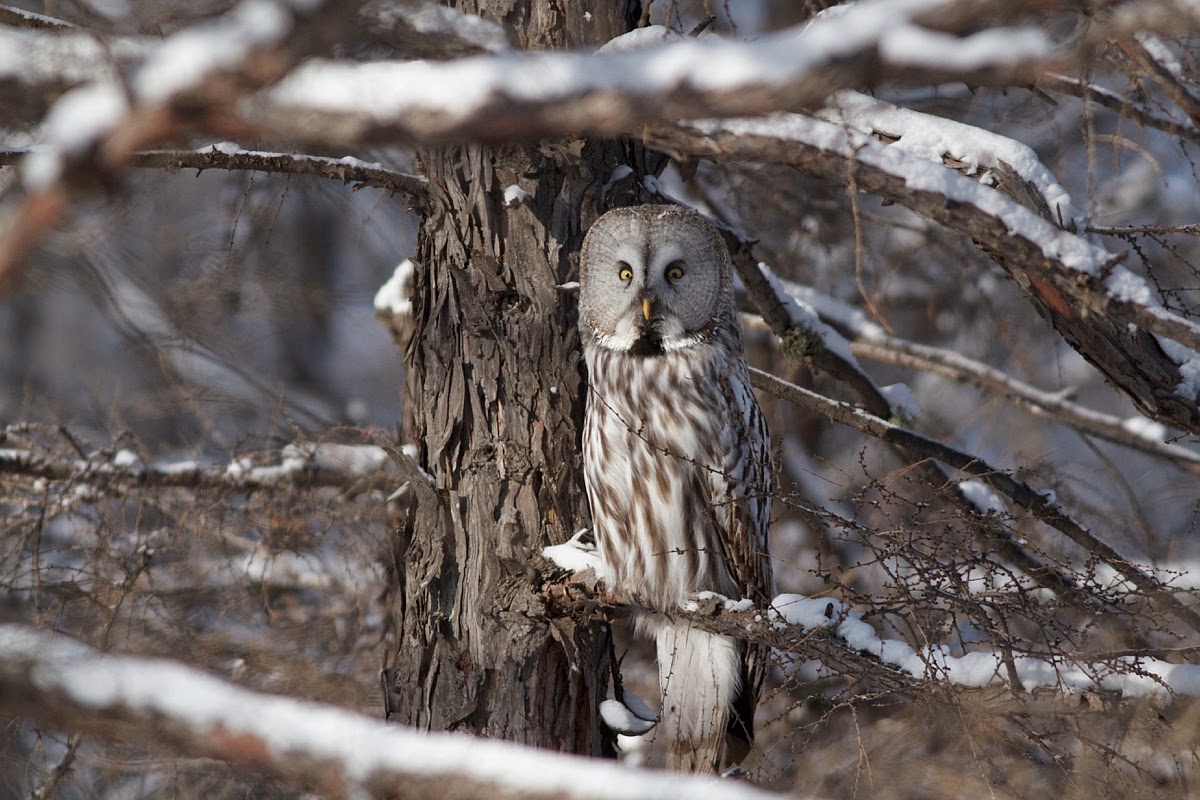
Great Grey Owl, Wuerqihan, Inner Mongolia,
China, December 2014. © T. Townshend

Terry Townshend, author of the fabulous blog and website Birding Beijing has finally completed a report of his Christmas trip to northern Inner Mongolia, close to the Russian border. It covers time in two locations – Wuerqihan and XiQi. There is a focus on owls but he and his companions were rewarded with a host of good birds including, among others, Arctic Redpoll, Siberian Jay, Pere David’s Snowfinch and Asian Rosy Finch. You can download the report here (Word, 12 MB).

Wuerqihan is c2.5 hrs E of Hailar (red pointer: Hailar),
and XiQi is c4 hrs W of Hailar (red pointer).

January 3, 2015


part three:

The way to Choibalsan

text by Abu

( links to previous posts: part 1, part 2 )


The metal box which failed to connect with the Beijing-UB flight,
Frankfurt/Main Airport, Germany, May 2014, © Mathias Putze

Never enough beer, right?
UB, May 2014, © Mathias Putze

One or two trays of vodka?
Not only beer was on our shopping list!
UB, May 2014, © Kirsten Krätzel

Tuul River in UB, from above,
May 2014, © Mathias Putze

One bag, actually the metal box containing our walk-in traps, did not arrive with us, and that gave us some time to go birding along the Tuul River in UB on 27 May. As usual, this was not done before our shopping had been completed. And we bought more than beer only! Most of our provisions for the entire trip were on our shopping list and it took quite a while to get everything. In the evening we had a nice dinner at one of our favorite restaurants. While I went to the airport, the group visited the Tuul River for a few hours of birdwatching. Between the many green bushes we saw the standard species like Lesser Spotted Woodpecker, Azure Tit, Long-tailed Rosefinch, Steppe Eagle, Black Stork, Citrine and Grey Wagtails, some stunning male Daurian Redstarts and a White-crowned Penduline Tit, which was attending a yet unfinished nest, and, much appreciated because flying rather low, a Booted Eagle. Then, once the box finally had arrived, it was fetched from the airport after a lengthy discussion with the customs officers and we teamed up again to set off for the east on 27 May.


Tuul River in UB,
May 2014, © Kirsten Krätzel

Female Long-tailed Rosefinch
UB, May 2014, © Mathias Putze

Male Long-tailed Rosefinch
UB, May 2014, © Mathias Putze

Male White-crowned Penduline Tit
UB, May 2014, © Thomas Langenberg

Booted Eagle
UB, May 2014, © Thomas Langenberg

Race horses on a truck between UB
and Öndorkhan, May 2014 © Mathias Putze

From UB to Öndorkhan we drove on an asphalt road and hence we did not see much from the fast driving car. It was obvious that Nadaam, one of the two major events in Mongolia, was near. Many race horses got a free ride to UB. We drove until late afternoon and then started looking for a nice spot to pitch our tents. The first night out we spent not far from Öndorkhan at a very small poplar plantation and an even smaller stream. Birds we logged during this first part of our journey were the mega abundant Père David’s Snowfinches, which uses the similar abundant holes of the likewise abundant Brandt’s Voles for breeding, Mongolian Lark, Asian Short-toed Lark, Richard’s Pipit, Citrine, Yellow and Grey Wagtails, lots of Mongolian Buntings aka Pallas’s Reed Bunting ssp. lydiae, Northern Lapwings, Common Sandpipers, 3 Common Shelducks, Common Tern (fascinating that it was checking out a small streamlet like this), Demoiselle Crane, several Amur Falcons in the poplars (but unclear whether they were breeding here) and a Steppe Eagle. A Corsac’s den full of playful youngsters was a nice bonus near the camp.


The streamlet near Öndorkhan,
May 2014 © Kirsten Krätzel

Young Corsac Fox near our first campsite,
near Öndorkhan, May 2014 © Thomas Langenberg

Demoiselle Crane
near Öndorkhan, May 2014 © Mathias Putze

Common Tern
near Öndorkhan, May 2014 © Mathias Putze

Asian Short-toed Lark
near Öndorkhan, May 2014 © Mathias Putze

Mongolian Lark
near Öndorkhan, May 2014 © Mathias Putze

Mongolian Lark
near Öndorkhan, May 2014 © Thomas Langenberg

Our camp near Öndorkhan,
May 2014 © Kirsten Krätzel

Tracks always come in groups,
between Öndorkhan and Choibalsan.
May 2014, © Mathias Putze

After a quick check of the morning birdlife we continued our eastbound migration. The asphalt road had ended which meant that we could only drive at a much reduced speed. So on this lag on 28 May we drove on tracks, which is still the most common type of road in the countryside. This particular stretch of the road was in very bad condition with plenty of deep holes, some even filled with water. En route birdwatching yielded a large group of 34 Eurasian Black Vultures and the standard suspects like Common Skylark, Upland Buzzard, Père David’s Snowfinch plus others were also recorded again. Further we had fleeting views of small but fast running groups of Mongolian Gazelle. Despite our slow pace, Choibalsan (CB) was reached in the early evening. For our second expedition night we chose to stay near the airport on the banks of the Kherlen River which is our standard site in/near CB (see here, Eastern Specialties trip). Surprisingly, there were not many birds in the bushes along the river but the photographers somehow managed to get decent shots of some of the few species around. The few birds around impressed with their songs: Siberian Rubythroat, Two-barred Warbler, Arctic Warbler (not an impressive song, agreed!), Oriental Reed Warbler and Black-faced Bunting. Highlight at the camp was a pair of Yellow-rumped Flyctachers.


Eurasian Black Vulture
between Öndorkhan and CB,
May 2014 © Thomas Langenberg

Chinese Spotbill (Duck)
CB, May 2014, © Mathias Putze

Our camp at the Kherlen River,
CB, May 2014 © Kirsten Krätzel

Black-faced Bunting
CB, May 2014, © Mathias Putze

Isabelline Wheatear
CB, May 2014, © Thomas Langenberg

Arctic Warbler
CB, May 2014, © Thomas Langenberg

Kherlen River near CB,
May 2014, © Kirsten Krätzel

The next day we crossed a sea of Stipa grass to reach the incredible Buir Nuur. Watch out and read more next!


Young Corsac Fox, watching out!
near Öndorkhan, May 2014 © Mathias Putze
December 31, 2014

December 25, 2014

Birding trip around the Khangai Mts
central Mongolia, summer 2013

Holy bird above holy place: Bearded Vulture
and Otgon Tenger, Jul 2013, © T. Hallfarth

part two:

high altitude birding

by Thomas Hallfarth

( link to previous post: part 1 )

After the northern bypass of the Khangai Mts we reached the westernmost region on 23 July. Here we found a nice campground in a little valley, not far from the main track, with larch taiga, a little stream, swamps, bushes, rocky slopes and specious meadows. There was alpine bird life, such as singles of Golden Eagle and Brown Accentor, 3 families of Eastern Stonechats and a feeding pair of Evermann’s Redstart.


Evermann’s Redstart
west part of Khangai Mts, Jul 2013, © B. Möckel

Our next overnight stay was about 50 km west of Otgon Sum, the little village about 40 km south of Otgon Tenger. The place was like a giant amphitheater with high cliffs and relatively dry scrub. The evening provided a single Isabelline Shrike, two Mongolian Accentors and in the darkness two hunting European Nightjars. In addition we observed a Sulphur-bellied Warbler next morning.


Sulphur-bellied Warbler
west part of Khangai Mts, Jul 2013, © B. Möckel

The next day we went to the Otgon Tenger plateau. Already on the way we made some nice observations. The best were two very close Bearded Vultures and about ten Saker Falcons. The following days we stayed near Otgon Tenger, the highest peak in Khangai Mts with a perpetual ice cover, set in a spectacular landscape. The summit reaches 4008 meters a.s.l. For Mongolians it is a sacred mountain. In addition to the perennial ice, the region offers freshwater lakes, boulders, and meadows with colourful plants and shrubs. The various habitats at these high altitudes have a very special birdlife. We observed many Water Pipits, one feeding pair of Güldenstädt’s Redstarts, a single Spotted Great Rosefinch, one adult male Hodgson’s Bushchat (and maybe a juvenile), and two Black Grouse. A juvenile Bluethroat was probably hatched at an altitude of around 2,500 meters a.s.l.


Otgon Tenger, highest peak in the Khangai Mts,
Jul 2013, © T. Hallfarth

Bearded Vulture
Otgon Tenger, Jul 2013, © T. Hallfarth

Güldenstädt’s Redstart
Otgon Tenger, Jul 2013, © B. Möckel

probably young Hodgon’s Bushchat
Otgon Tenger, Jul 2013, © T. Hallfarth

Water Pipit, juvenile
Otgon Tenger, Jul 2013, © T. Hallfarth

Bluethroat, juvenile
Otgon Tenger, Jul 2013, © T. Hallfarth

Another fantastic area of high altitude landscape was the mountain region around the lake Khukh Nuur in Bayankhongor Province (aimak). This boomerang-shaped lake had a gull colony. Abu wrote about this and about the special bird life in a former entry (see here). Our bird observations were not so rich, because in midsummer birds are quiet and in moult. We saw some Twites, and a single Spotted Great Rosefinch, Altai Accentor, at the lake also several groups of Bar-headed Geese and of course many hundreds of Mongolian Gulls.


Khukh Nuur: beautiful landscape in the western
Khangai Mts , Jul 2013, © T. Hallfarth

Bar-headed Geese
Kukh Nuur, Jul 2013, © T. Hallfarth

After this birding experience at such high altitudes we joined the nomadic family of our driver’s brother, who lives with his wife and four of his five kids in two yurts. They keep hundreds of sheeps and goats, about 40 yaks and a lot of horses. Besides birding, this insight of nomadic life was also a very interesting experience!


Dinner for all, west part of the Khangai Mts,
Jul 2013, © T. Hallfarth


Now it’s time for the greatest Gobi-lake, Boon Tsagaan Nuur. You can read about this in the following, the last part, of our little trip report.

December 20, 2014

Bohemian Rhapsody

text & photos by ABu

1. Can you identify this bird?
UB, October 2014

2. What about this one? Any idea?
UB, October 2014

3. Another bird, another try!
UB, October 2014

OK, OK, I must admit that it is not really challenging to identify all the birds above as Bohemian Waxwings Bombycilla garrulus. But what about sexing and aging them?

Even for the most basic science projects, like counting birds, one needs to identify the birds that got to be counted. More sophisticated scientific approaches surely could and would largely benefit from more elevated skills. It is possible to monitor the breeding success of species that breed in area with low observation pressure. All high arctic geese species are monitored on their wintering grounds, because it is easy to tell adults from juveniles. By doing so the data collected become also very valuable for conservationists. Aging and sexing is not possible in many songbirds but in Bohemian Waxwing it is straightforward.

All the information about sexing and aging of Bohemian Waxwing can be found in various publications (see below) and I simply have compiled this info here. The pictures show the Asian subspecies centralasiae which does not differ much from nominate. They had been taken on 25 October 2014 below Songino Khairkhan Uul, Ulaanbaatar, where c. 250 waxwings were busily foraging in the trees.

So let’s start with task of aging. All you need to do is checking the primary tips. There are 6 to 7 exposed primary tips to be checked. Juvenile primaries, which are moulted about one year after fledging, differ obviously from older generations of primaries. If the bird in question has the yellow fringe at the tip only on the outer web then it still has juvenile primaries and hence is in its first winter. On the folded wing these pale yellow streaks seemingly fuse to a single line. Adults show also some yellow along the feather tip on the inner web which creates a clear yellow angle. This is most pronounced in males. Females usually show only very weak yellow fringes on the inner web which can be completely lacking on some primaries. But even so, there never will be just a single line down the primaries. Furthermore the yellow is yellower in adults, especially on the inner 3 to 4 of the exposed primaries.

Once aging is completed one could continue with sexing. For sexing you should check all of the several field marks to reach the safe side. In general, and this applies to all ages, males show a wider yellow tip to the tail feathers. Unfortunately there is a little overlap making this feature not totally foolproof. This means that only extremes can be sexed by using solely this character.

Next to be controlled is the size and number of the waxy tips of the tertials (and some secondaries). Please note, that some adults, and it is again more often seen in males, can show these waxy tips also to the tail feathers. Adults have not only the bigger waxy tips but also more (on average only, so be careful with this as well!) and males have not only bigger ones but also more compared to females of the same age. Because of the overlap in numbers again only extreme examples can be sexed. In young birds those with no or only a single waxy tip are female and those with 8 are male. In adults males have 6 to 8 and females 5 to 7. In field it will be impossible to count the waxy tips accurately enough, so forget it and take good pictures and count the waxy tips on your screen.

Although some think the final character to be checked is not an easy one to pin down in the field, it can be checked on photographs. The lower border of the throat-patch is sharply demarcated in males and is diffuse in females.

In the field it will look like this:

Adult male

Pictures 4 to 6 show the same adult male. Note that this one has only 5 but quite large waxy tips (they can break off! On the other wing it has 7 waxy tips) but it shows both, a very broad yellow tail tip and very broad angles to the primary tips (picture 5). Also, its throat-patch shows a sharp border (picture 6).

The second adult male, featured in pictures 7 to 9, also has a reduced number of waxy tips. But the remaining ones are quite large (long). It has angles to the tips of the primaries, a well defined throat-patch (picture 9) but this one’s tail band is not that broad (picture 8).


4. Adult male Bohemian Waxwing
UB, October 2014

5. Details of tail and wing of the bird in picture 4
UB, October 2014

6. Head of the same bird as in pictures 4 and 5,
UB, October 2014

7. Adult male Bohemian Waxwing
UB, October 2014

8. Details of tail and wing of the bird in picture 7
UB, October 2014

9. Head of the same bird as in pictures 7 and 8,
UB, October 2014


Adult female

Adult females are next. The one in pictures 10 to 12 can easily be aged by its angles on the primary tips (but not on the two longest primaries!). However, they are quite narrow as is the yellow on tail tip. Its 6 waxy tips are rather large (picture 11). In picture 2 it can just be seen that the border of the throat-patch is diffuse.

Another adult female is shown in pictures 13 and 14. Note the narrow angles and its narrow yellow tail-band. It has also 6 rather long waxy tips.


10. Adult female  Bohemian Waxwing
UB, October 2014

11. Details of tail and wing of the bird in picture 10
UB, October 2014

12. Head of the same bird as in pictures 10 and 11,
UB, October 2014

13. Adult female Bohemian Waxwing
UB, October 2014

14. Details of tail and wing of the bird in picture 13
UB, October 2014


First winter male

In the following 4 pictures (13 to 16) you can see how easy it can be if you can look closely enough.

Note that there are no angles on the primaries. It has a very broad yellow tail-band, 6 rather large for a bird of this age waxy tips (picture 14) and shows a very well demarcated throat-patch (pictures 15 and 16).


15. First winter male Bohemian Waxwing
UB, October 2014

Details of tail and wing of the bird in picture 15
16. UB, October 2014


17. Head of the same bird as in pictures 15 and 16,
UB, October 2014

18. Another view of the head of the same bird as in pics 15 to 17,
UB, October 2014


First winter female

The first winter female in the pictures 19 to 21 can be aged by the lack of the primary angles and sexed by the narrow tail band and its diffuse border to the throat-patch.


19. First winter female Bohemian Waxwing
UB, October 2014

20. Details of tail and wing of the bird in picture 19
UB, October 2014

21. Head of the same bird as in pictures 19 and 20,
UB, October 2014


That’s it. Not quite. Test yourself with the following 12 pictures.


Bohemian Waxwing (first winter female)
UB, October 2014

Bohemian Waxwing (adult male)
UB, October 2014

Bohemian Waxwing (adult female)
UB, October 2014

Bohemian Waxwing
(first winter female, aging not possible from this picture)
UB, October 2014

Bohemian Waxwing
(adult male, same as in pictures 4 to 6)
UB, October 2014

Bohemian Waxwing (first winter female)
UB, October 2014

Bohemian Waxwing (adult female)
UB, October 2014

Bohemian Waxwing (adult female)
UB, October 2014

Bohemian Waxwing
(first winter female, same as in the next picture)
UB, October 2014

Bohemian Waxwing
(first winter female, same as in the picture above)
UB, October 2014

Bohemian Waxwing
(first winter male, same as in the next picture)
UB, October 2014

Bohemian Waxwing
(first winter male, same as in the picture above)
UB, October 2014


First three photos, solution:

Pictures 1 and 2 show an adult male.
Picture 3 shows a first winter male.


Recommended reading

Svensson, L. 1992: Identification Guide to European Passerines. Stockholm.

Svensson, L., K. Mullarney & D. Zetterström 2009: Collins Bird Guide. London.

Graf, O. & R. Martin 2005: Alters- und Geschlechtskennzeichen des Seidenschwanzes Bombycilla garrulus. Limicola 19: 233-239.


I hope that this post will help you in the field.
So go after them!